
Starting the Year Confident: Why Confidence Is Registered in the Body
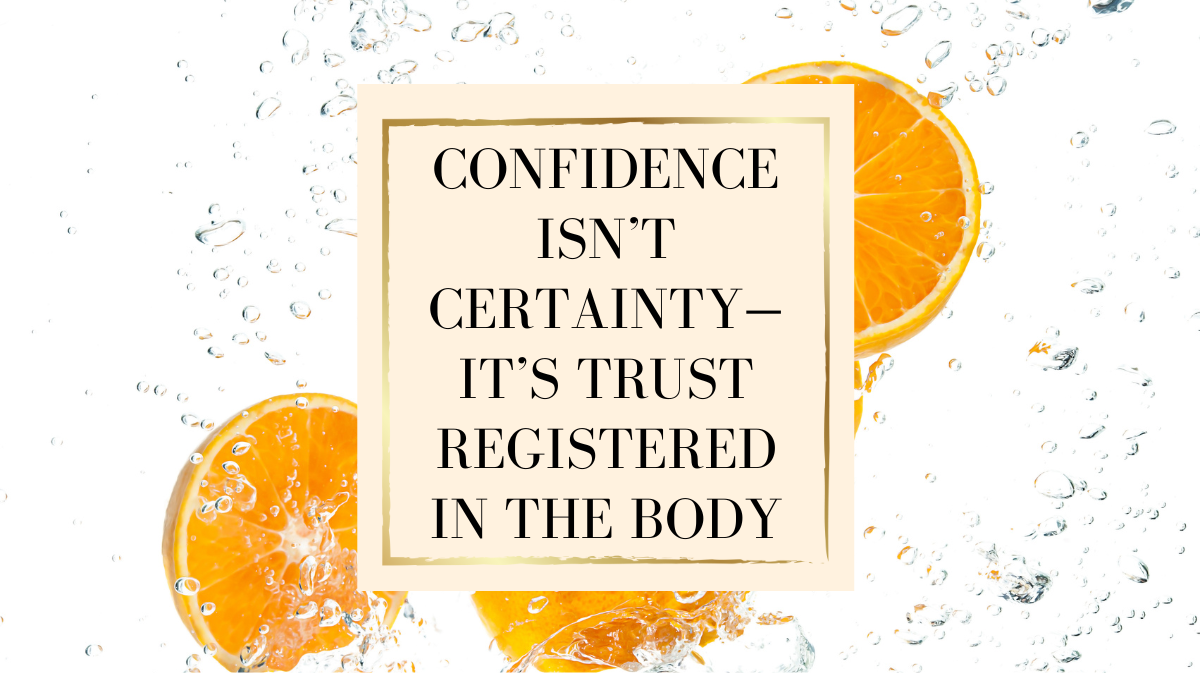
Confidence is often mistaken for certainty.
We tend to associate confidence with decisiveness, assertiveness, or having the right answer. But true confidence—especially in complex or uncertain environments—comes from something deeper.
It comes from trust.
And trust is registered in the body, where safety is felt rather than reasoned.
When the nervous system is regulated, the body provides a steady internal reference point. You’re less likely to override your instincts, second-guess yourself, or look outside yourself for validation. Instead, you can stay connected to what you know—without needing to prove it.
Confidence as an embodied experience
A lack of confidence doesn’t usually reflect a lack of skill. More often, it reflects a nervous system that’s bracing—anticipating judgment, risk, or failure.
Somatically, this can show up as:
Collapsing posture or shallow breathing
Over-preparing or over-explaining
Hesitation, even when you know what you want to say
Using the **3N Model™—Notice, Name, Navigate—**confidence becomes something you cultivate rather than perform.
Notice sensations like contraction, holding, or withdrawal
Name what they may be signaling—uncertainty, vulnerability, protection
Navigate forward with presence instead of force
In practice, this might look like grounding your feet before speaking, allowing your breath to deepen, or giving yourself permission to pause—without filling the space.
Confidence grows through regulation
Confidence isn’t about eliminating discomfort. It’s about staying present with it.
When your nervous system is more regulated:
You trust your timing and judgment
Your voice feels steadier
Your presence feels more authentic
This kind of confidence doesn’t need to be loud. It’s felt—by you and by others.
As you continue into the new year, consider this question:
What helps your body feel steady enough to trust the process and stay engaged in it?
That steadiness is where reparative experiences—moments that restore trust and capacity—begin. And it’s where confidence grows.
This January series has explored how calm creates capacity, clarity sharpens focus, and confidence grows from trust. Each begins not with doing more—but with noticing more.
If you’re curious about applying this work more directly to your leadership, career, or current season of change, I invite you to email me at jennifer@somaticallyaware.com.
I’m happy to offer insight, answer questions, or help you identify what kind of support would be most useful right now.
