
Navigating the Darkness of Uncertainty
There is a particular kind of discomfort that comes with uncertainty. Grappling with the darkness. Craving a light for the path ahead.
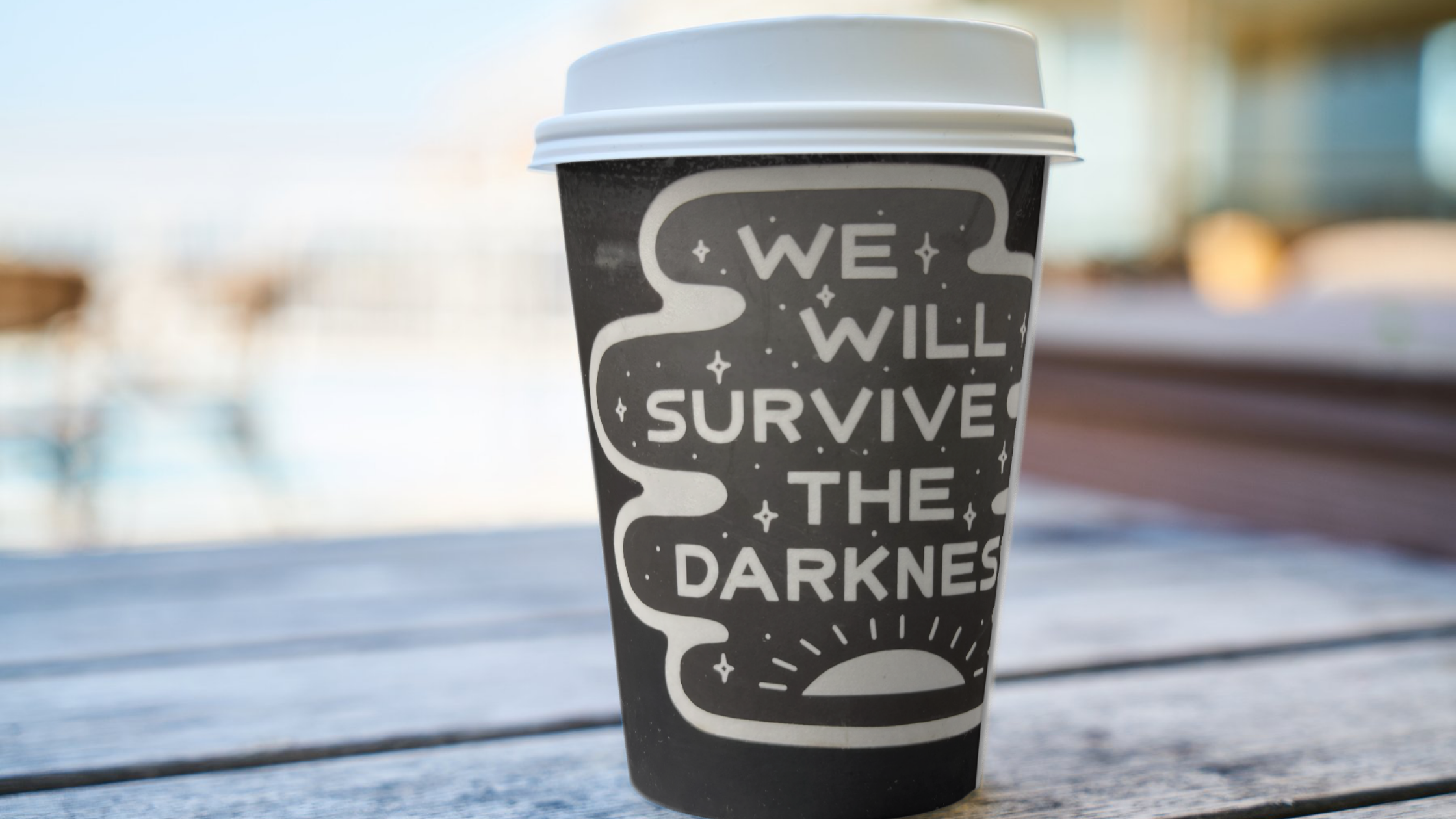
I am no stranger to this space. The inky darkness of uncertainty has followed me most of my life — and breast cancer, if you can believe it, was not the darkest of them. I have a saying on my refrigerator: "We Will Survive the Darkness." It gives me hope and a deep appreciation for the seasons of light that have carried me to where I am today — 56, and the happiest, most content I have ever been.
Last week was one of those seasons of light. I had the privilege of being in the room for Liz Wiseman's closing keynote at the Association for Talent Development's 2026 International Conference in Los Angeles. Liz is the author of Multipliers and Impact Players, and what she said on that stage stayed with me. It dawned on me at the end of her talk: my work in somatic awareness and the 3N Model™ — Notice, Name, Navigate — is a flashlight for navigating the darkness.
What Liz Wiseman Knows About the Unknown
Liz's research on Impact Players reveals something that sounds simple until you sit with it: the people who thrive in uncertain environments don't have more information than everyone else. They have a different relationship with not-knowing.
Where most of us instinctively pull back when conditions get murky — waiting for clarity, direction, certainty before we act — Impact Players move toward the ambiguity. I learned early that the only way through the darkness is through, not around.
This isn't recklessness. It's a mindset shift about what uncertainty actually means: Is it unsafe — or just uncomfortable? Impact Players have quietly rewritten the internal rule from uncertainty = danger to uncertainty = an invitation to contribute. They ask and adjust. They finish stronger than they started, even when the finish line moved. They run the race of endurance.
And critically — they make the work lighter for the people around them. They don't add noise or drama to an already disorienting situation. They bring presence and co-regulation.
Cognitive and somatic skills.
The Body Was Always Part of This Conversation
Here's what Liz's research points to from the outside — and what I've been exploring from the inside: navigating uncertainty isn't primarily a thinking problem. It's a nervous system problem.
When we encounter the unknown, the body responds before the mind does. A tightening in the chest. A shoulder creeping toward the ear. A low-grade hum of vigilance running beneath our most rational thoughts. The mind then scrambles to catch up — scanning for threats, reaching for certainty, constructing stories about what the uncertainty means.
And that's where most strategies get stuck. We try to think our way out of a feeling that lives below thinking.
This is where the 3N Model™ offers a different doorway.
Notice invites you to get curious about what's already happening in your body before your brain has formed an opinion about it. Not to fix it. Not to judge it. Just to see it. Is there tension somewhere? A heaviness that arrived last week and never quite left? You don't have to understand it yet. You just have to see it.
Name is where language becomes an act of quiet courage. Naming an internal experience doesn't mean you've solved it — but something shifts when you can say, even privately: this is fear. Or this is grief disguised as productivity. Or this is excitement my nervous system is reading as threat. The named thing loses some of its grip. Not all of it. But enough.
Navigate is the step most people want to jump to first — skip the first two, just tell me what to do. But the quality of your navigation depends entirely on the state you're navigating from. A decision made from a flooded, reactive nervous system is a fundamentally different decision than one made from a regulated, grounded body.
When you've taken even a few seconds to Notice and Name, the path forward gets clearer. More honest. More yours.
My own somatic awareness began early — I was born with a hereditary condition that creates weakness in my limbs, giving me what I describe as weak springs for ankles. My body has always been a teacher. I've learned to listen.
Uncertainty Is Not the Opposite of a Good Life
One of the things Liz said that landed most was this: the leaders who reduce fear and uncertainty for the people around them aren't the ones who have eliminated uncertainty from their own experience. They're the ones who have learned to be with it — steadily, groundedly, without requiring it to resolve before they can show up.
That is the practice.
Not fixing the not-knowing. Not rushing past it. Not performing confidence you don't feel. But learning to stand in the fire — to stay present inside the question — and from that presence, contribute something real.
The most meaningful seasons of my life have lived inside questions I couldn't answer yet. They required me to stay. To Notice what was alive in me even when nothing felt settled. To Name it honestly, even when I didn't like what I found. And then, slowly, to Navigate — not toward a guaranteed outcome, but toward integrity with who I am becoming. Trusting the process. Staying active in it.
If you're sitting with something unresolved right now — a transition, a question about what comes next, a role that's shifting under your feet — I want to offer you this:
Your body already has information your mind hasn't processed yet.
Start there.
Notice what's happening. Name what you find. And from that grounded place, take the next step — not because the path is clear, but because the path reveals itself one step at a time.
That's not the absence of uncertainty. That's navigating through it.
